

Uncategorized
Mimosa Hostilis vs. Mimosa Pudica: The Complete Identification & Comparison Guide
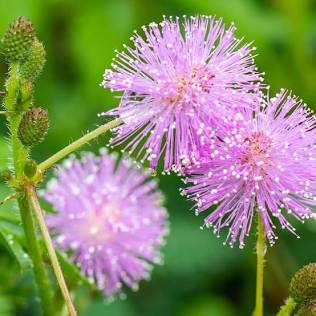
While both share the genus Mimosa within the legume family (Fabaceae), Mimosa hostilis (syn. Mimosa tenuiflora) and Mimosa pudica are fundamentally different botanical species. They differ completely in growth form, active chemical constituents, primary applications, and legal status.
- Mimosa pudica is a low-growing, touch-sensitive herb commonly known as the “Shameplant” or “Touch-Me-Not,” prized as an ornamental houseplant and processed into dietary supplements for digestive cleansing.
- Mimosa hostilis (Mimosa tenuiflora) is a perennial woody tree native to semi-arid scrublands, prized for its high-tannin inner root bark (MHRB) used in textile dyeing, Tepezcohuite skincare, and ethnobotanical research.
1. Quick Comparison Overview
| Feature | Mimosa pudica | Mimosa hostilis (M. tenuiflora) |
| Common Names | Sensitive Plant, Touch-Me-Not, Shameplant | Jurema Preta, Tepezcohuite, Black Jurema |
| Plant Form | Low creeping subshrub / sprawling herb (0.3–1 m) | Woody perennial thorny tree or shrub (up to 8 m) |
| Touch Response | Rapidly folds leaflets upon contact (seismonasty) | Leaves do not collapse on mechanical touch |
| Flower Structure | Round, pink-to-purple globe-shaped “pom-poms” | Elongated cylindrical spikes of white-to-yellow flowers |
| Primary Botanical Part | Seeds and aerial parts / whole root | Inner root bark (cambium layer / MHRB) |
| Core Active Compounds | Mimosine, mucilaginous polysaccharides | Condensed tannins (16–20%), saponins, $N,N$-DMT |
| Primary Modern Use | Gut cleanse supplements & decorative gardening | Natural fabric dyeing, leather tanning & skincare soaps |
| Internal Ingestion | Common (standardized seed capsules/extracts) | Not intended for human consumption |
| Legal Restrictions | Unrestricted worldwide | Raw bark legal for craft; chemical extraction illegal |
2. Botanical Differences: How to Tell Them Apart
Growth Habit & Size
- Mimosa pudica: Operates as a short-lived perennial herb or annual groundcover. Stems are thin, green-to-reddish, flexible, and sparsely lined with small prickles. It rarely grows taller than 50 to 100 cm.
- Mimosa hostilis: Develops a robust, woody trunk and dense hardwood canopy reaching heights of 4 to 8 metres. Its branches are armed with strong, curved, woody thorns up to 3 cm long.
Leaf Sensitivity (Seismonastic Movement)
- Mimosa pudica: Contains specialised motor cells called pulvini at the leaf joints. Touching, shaking, or heating the leaves causes sudden turgor loss, folding the leaflets together within fractions of a second.
- Mimosa hostilis: Does not collapse upon touch. Like many legumes, its fern-like leaves display standard nyctinasty (closing slowly at nightfall), but mechanical touch triggers no immediate reaction.
Flowers & Seed Pods
- Mimosa pudica: Produces spherical, pink-to-lavender blossoms resembling fluffy pom-poms (1–2 cm diameter) on slender stalks.
- Mimosa hostilis: Yields dense, cylindrical, finger-like flower spikes (4–8 cm long) that are ivory-white to pale yellow and heavily fragrant.
3. Chemical Profiles & Active Compounds
The confusion between these two species poses genuine safety risks because their biochemical profiles serve entirely different purposes.
Mimosa pudica: Mucilage & Phytosterols
- Mucilaginous Seeds: The seeds contain complex, water-absorbing polysaccharides. When ingested with fluids, they form a thick, non-digestible gel that sweeps through the gastrointestinal tract, binding stagnant waste and microbial biofilms.
- Mimosine: A non-protein amino acid native to the plant. While therapeutic at low, controlled doses, raw overconsumption can be toxic to livestock and hair follicles, which is why commercial supplements use refined extracts.
- Alkaloids: Contains trace, biologically minor beta-carbolines and phenethylamines, but no psychoactive tryptamines.
Mimosa hostilis: Tannins & Indole Alkaloids
- Condensed Tannins (16–20%): The inner root bark contains an exceptional concentration of proanthocyanidins and catechins, functioning as an astringent and a substantive dye.
- Triterpenoid Saponins (Mimonosides): Key drivers of cellular regeneration in traditional Mexican Tepezcohuite burn treatments.
- $N,N$-Dimethyltryptamine ($N,N$-DMT): The inner root bark naturally synthesizes notable concentrations of indole alkaloids ($N,N$-DMT), anchoring its historical ceremonial use in Brazilian Vinho da Jurema.

4. Practical Applications: When Is Each Used?
Typical Uses for Mimosa pudica
- Digestive Cleansing Protocols: Packaged as dry seed capsules to physically bind to intestinal debris and support microbiome balance.
- Ornamental Gardening: Grown indoors on windowsills as a popular curiosity plant demonstrating plant neurobiology and movement.
- Ayurvedic Medicine: Traditionally used as a cooling paste for minor skin rashes or hemorrhoids.
Typical Uses for Mimosa hostilis
- Natural Textile & Leather Dyeing: Yields rich, permanent burgundy, terracotta, and deep violet shades on wool, silk, and cotton without toxic synthetic mordants.
- Artisan Soaps & Cosmetics: Known in Mexico as Tepezcohuite, finely milled powder is incorporated into cold-process soaps and topical salves for irritated skin.
- Ethnobotanical Collections: Maintained as reference specimens for academic research into natural plant dyes, Caatinga ecology, and indigenous rituals.
5. Safety, Ingestion & Regulatory Status
Ingestion Safety Warning
- Do NOT ingest Mimosa hostilis: The root bark is an industrial, craft, and botanical raw material. Consuming raw MHRB can cause severe nausea, violent vomiting, and tachycardia due to high tannin toxicity and alkaloid activity.
- Mimosa pudica must be verified: Only commercially prepared, certified seed extracts of Mimosa pudica formulated specifically as dietary supplements should be taken internally. Never consume wild-harvested roots or raw foliage.
Legal Status
- Mimosa pudica: Completely legal across all jurisdictions. Seeds, live plants, and extract capsules are sold freely in garden centers, pharmacies, and health food stores.
- Mimosa hostilis: Purchasing raw, untreated root bark for legitimate technical uses (textile dyeing, leathercraft) is legal in most countries. However, attempting to isolate, chemically extract, or ingest its naturally occurring DMT content violates national narcotics laws (such as the BtMG in Germany or the Controlled Substances Act in the United States).
Frequently Asked Questions
Can I use Mimosa hostilis for intestinal parasite cleansing?
No. Mimosa hostilis is not a digestive supplement. The plant used for mechanical gut cleansing and detox protocols is Mimosa pudica (specifically the seeds). Ingesting Mimosa hostilis can cause severe gastrointestinal distress.
Does Mimosa pudica contain DMT?
No. Rigorous botanical testing confirms Mimosa pudica does not contain $N,N$-DMT. It is chemically distinct from Mimosa hostilis.
Why is Mimosa hostilis called Tepezcohuite?
Tepezcohuite is the indigenous Nahuatl name for Mimosa tenuiflora (Mimosa hostilis) in Mexico, translating loosely to “tree of the hill that produces skin.” It refers to the historical use of its pulverized bark for soothing burns and promoting skin repair.
Summary
- Choose Mimosa pudica if you are looking for an educational, touch-sensitive houseplant or a natural, gel-forming gut cleanse supplement.
- Choose Mimosa hostilis if you require high-tannin inner root bark (MHRB) for natural textile dyeing, traditional leathercraft, or handcrafted Tepezcohuite topical soaps.
