

Uncategorized
Is Mimosa Hostilis Root Bark Legal to Buy in Europe? Laws, Customs & What You Need to Know
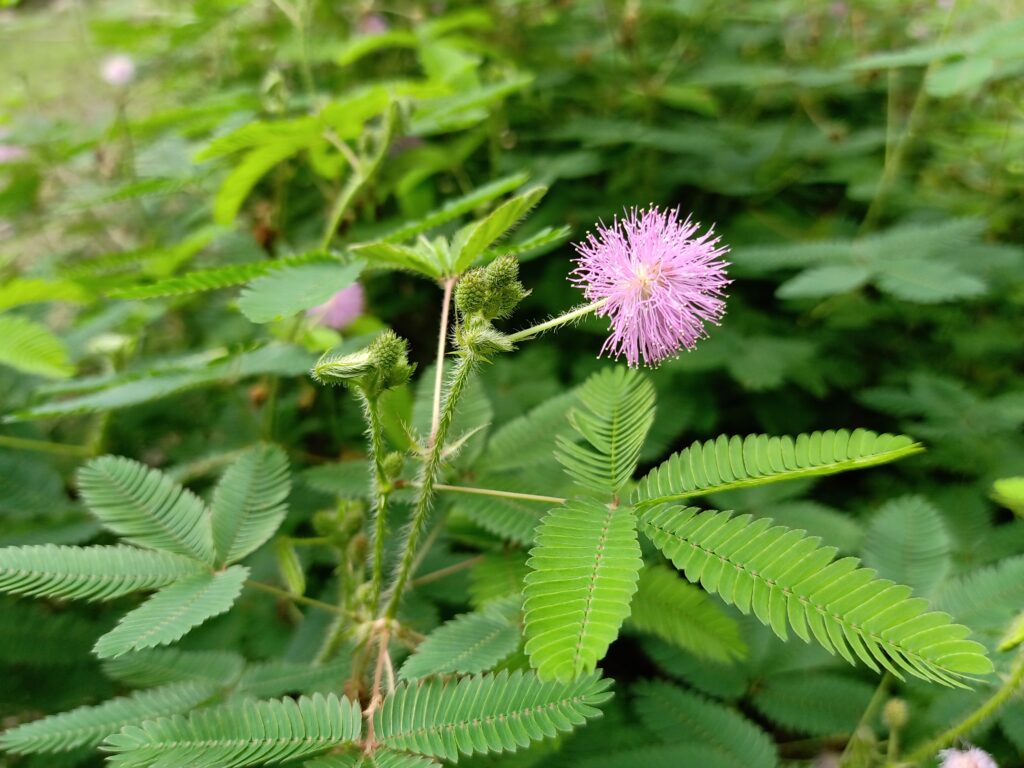
The short answer is nuanced: across most of the European Union, untreated Mimosa hostilis root bark (MHRB) is not explicitly scheduled as a controlled substance, making the purchase and possession of raw bark legal for lawful crafts such as natural textile dyeing, leather tanning, and botanical collections. However, because the inner root bark naturally synthesizes $N,N$-dimethyltryptamine ($N,N$-DMT)—a strictly controlled Schedule I substance—its legal status depends heavily on user intent, national jurisprudence, and chemical processing.
Navigating European regulations requires understanding the boundary between an unregulated raw botanical and an illegal narcotics offense.
1. International & EU Foundation: The 1971 UN Convention
The baseline for European drug legislation stems from the United Nations 1971 Convention on Psychotropic Substances.
- The Molecule vs. The Plant: Under Schedule I of the 1971 Convention, pure $N,N$-DMT is an internationally controlled substance.
- Official INCB Position: The International Narcotics Control Board (INCB) has repeatedly confirmed that raw plants and plant materials containing DMT are not scheduled under the 1971 Convention. Neither Mimosa hostilis (Mimosa tenuiflora) nor other DMT-bearing botanicals (like Psychotria viridis) are listed as controlled plants at the international treaty level.
- The Legal Distinction: As a result, the European Union does not impose an EU-wide blanket ban on the tree itself; individual member states govern plant parts through their own national narcotics acts.
2. The Doctrine of “Intended Use”
In most European legal systems, legality hinges on the intended purpose of the buyer:
| Classification | Legal Status | Examples |
| Lawful Technical & Craft Use | Permitted | Textile vat dyeing, leather tanning, cold-process soapmaking (Tepezcohuite), taxonomic herbarium reference. |
| Extraction & Chemical Processing | Strictly Illegal | Using solvents (naphtha, heptane, acid/base solutions) to isolate or concentrate DMT. |
| Human Ingestion / Decoctions | Prohibited | Brewing teas, infusions, or traditional preparations intended for consumption or psychoactive effects. |
If an individual imports, orders, or holds MHRB with the demonstrable intent to extract DMT, courts across Europe interpret the plant material as a precursor or raw compound for drug manufacture, triggering severe criminal penalties under narcotics statutes.
3. Country-by-Country Legal Landscape in Europe
European countries interpret the presence of naturally occurring alkaloids differently:
Germany
- Status: Regulated under the Betäubungsmittelgesetz (BtMG).
- The Law: DMT is listed in Annex I (non-marketable narcotics). While Mimosa tenuiflora is not named as a forbidden plant, the law states that plant parts containing controlled substances fall under the BtMG if misuse for intoxicating purposes is intended.
- Practice: Buying raw bark solely as a natural dye is lawful, but customs authorities frequently detain powdered shipments to investigate intended use.
The Netherlands
- Status: Legal gray area / Monitored.
- The Law: DMT is an Opium Act List I substance. While live plants and raw root barks have historically been traded openly in smartshops and online stores, the Dutch Supreme Court ruled in 2019 that prepared ayahuasca decoctions are illegal. Raw root bark remains widely available for craft use, though commercial marketing for consumption is prohibited.
United Kingdom
- Status: Restricted.
- The Law: Under the Misuse of Drugs Act 1971, DMT is a Class A controlled drug. While raw, untreated bark is not automatically Class A, UK Border Force treats imports with high suspicion. If authorities suspect intent to extract, shipments are seized and police investigations may follow.
France
- Status: Explicitly Banned.
- The Law: France has some of the strictest botanical laws in Europe. Following decree updates, France classified ayahuasca and its plant components (including plants containing DMT or harmala alkaloids) as stupéfiants (narcotics). Possessing or importing Mimosa hostilis into France carries serious legal risk.
Denmark & Sweden
- Status: Controlled / High Risk.
- The Law: Nordic customs agencies enforce zero-tolerance interpretations. Sweden and Denmark classify any plant preparation containing measurable quantities of DMT as an illegal narcotic preparation. Importing root bark into Nordic territories frequently leads to customs seizures and criminal charges.
4. Powder vs. Shredded: Why Consistency Matters to Customs
European border agencies distinguish sharply between physical cuts of botanical matter:
- Micro-Milled Powder: Micronised powder resembles illicit substances on X-ray scanners and is the easiest format to chemically process. Consequently, powder experiences the highest rate of customs parcel intercepts, lab testing, and administrative delays.
- Shredded & Whole Bark: Coarse plant ribbons and intact bark slabs clearly display the vascular cambium of a tree. They look unmistakably like timber/craft materials and undergo smoother customs checks when accompanied by legitimate trade declarations.
5. Customs Clearance & Ordering Safely Within the EU
To ensure full compliance when ordering botanical raw materials:
- Order Intra-EU: Ordering from an established European supplier avoids external customs borders, eliminating non-EU import declarations, third-country tariffs, and random border holding facilities.
- Clear Commercial Invoicing: Legitimate vendors label their products transparently with the proper Latin binomial (Mimosa tenuiflora / Mimosa hostilis) and state its true industrial classification: “Raw Botanical Dye Material / Natural Textile Colorant — Not for Human Consumption.”
- Avoid Disreputable Sources: Avoid overseas vendors who use covert packaging or market the plant alongside recreational drug paraphernalia. Covert packaging signals illicit intent to customs inspectors.
- Respect Local Prohibitions: If you reside in France, Sweden, or Finland where domestic laws strictly forbid DMT-bearing plant matter regardless of use, do not attempt to import MHRB.

Frequently Asked Questions (FAQ)
Can I get arrested for buying Mimosa Hostilis root bark in Europe?
If you live in a country where the raw plant is not scheduled (such as Germany, Spain, or the Czech Republic) and you purchase it strictly for lawful textile or craft purposes from an EU supplier, possession of the raw plant is not a criminal offense. However, possessing chemical laboratory extraction equipment alongside the bark establishes criminal intent to manufacture a Class A / Schedule I substance, which leads to arrest and prosecution.
Is it legal to drink Mimosa Hostilis tea or Jurema wine in the EU?
No. Preparing a brew for oral consumption to experience psychoactive effects constitutes the preparation of an illicit narcotic formulation under domestic drug laws.
Why do textile artisans choose MHRB if the legalities are complex?
Because the plant’s inner root bark contains an unusually high volume of water-soluble condensed tannins (16–20%) that produce vibrant, washfast burgundy, purple, and earthy red hues without synthetic fixatives, making it a staple in natural fiber dyeing.
Summary
In most European countries, Mimosa hostilis root bark remains an accessible botanical raw material for artists, tanners, and researchers. The law draws a line at consumption and chemical extraction. By sourcing clean, properly declared botanical bark strictly for legitimate artisanal applications, buyers remain on solid legal ground.
